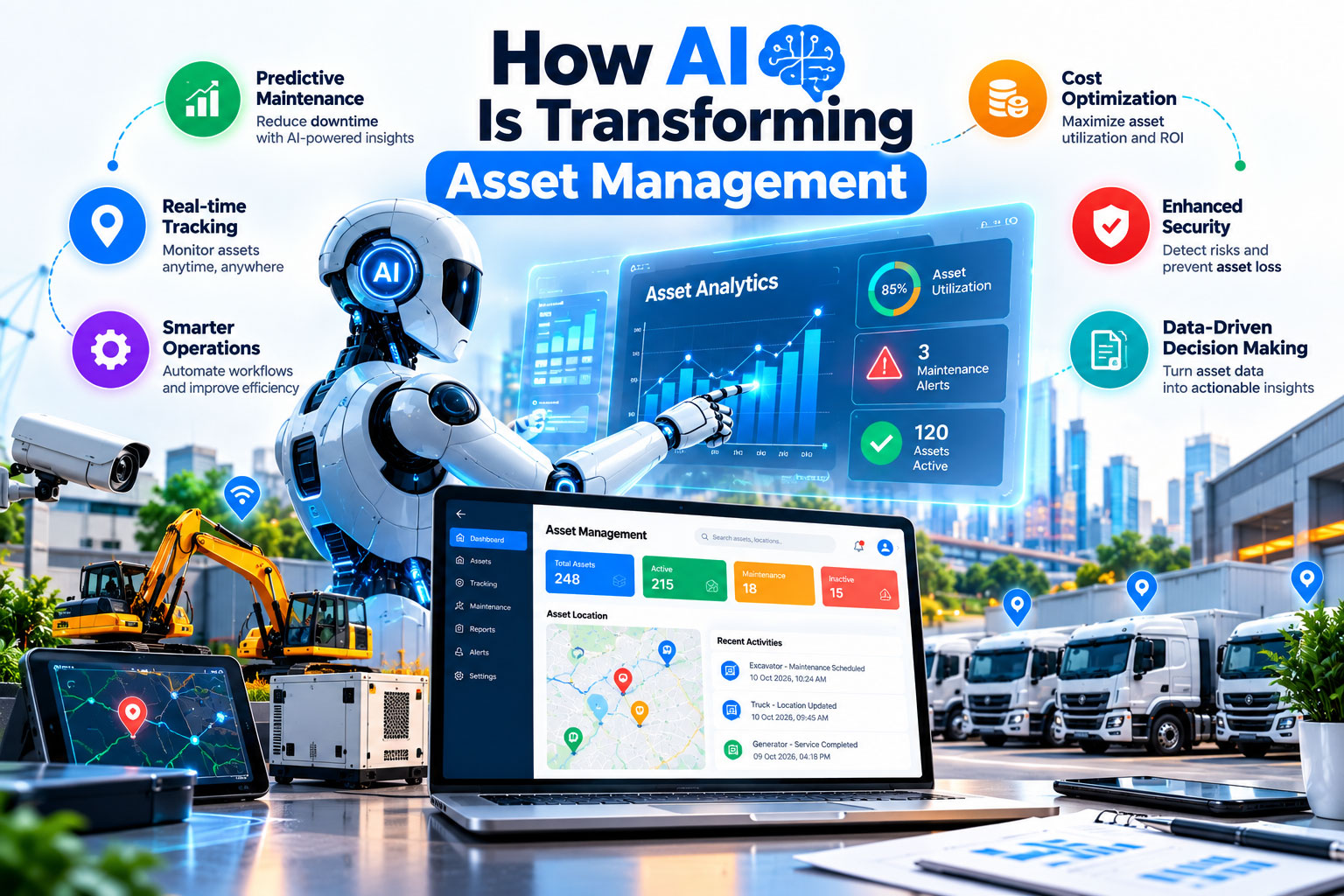
For decades, asset management software functioned as passive electronic filing cabinets—recording where items were placed and when they were purchased. Today, Artificial Intelligence (AI) is transforming these systems into active, predictive command centers that anticipate failures, automate support, and optimize enterprise resources.
The Evolution of Intelligent Asset Management
Traditional asset registers relied entirely on manual human input. If a technician forgot to log an equipment transfer or misread a serial number, the database became untrustworthy. Furthermore, identifying patterns across thousands of disparate devices required hours of manual spreadsheet number-crunching.
Modern AI-augmented asset management shifts the burden from humans to intelligent algorithms. By continuously analyzing endpoint telemetry, maintenance frequency, location trails, and utilization rates, AI platforms provide operational leaders with actionable, proactive recommendations.
AI-Assisted Workflows and Real-Time Telemetry Analysis
Modern enterprise devices generate massive streams of telemetry data. IoT tracking sensors report coordinates; laptop operating systems report storage and battery health; and field telematics record engine idle times. AI excels at ingesting this noisy data and surfacing meaningful operational signals:
- Anomaly Detection: Identifying sudden deviations in power draw, temperature, or transmission intervals that precede hardware breakdown.
- Automated Route Optimization: Analyzing historical movement trails to help fleet coordinators reduce fuel consumption and transit bottlenecks.
- Automated Classification: Parsing vendor invoices and spec sheets using natural language processing to automatically extract serial numbers, model numbers, and warranty dates without human typing.
Moving from Reactive Break-Fix to Predictive Maintenance
One of the most valuable applications of industrial AI is predictive maintenance. Traditional maintenance approaches fall into two flawed categories:
| Maintenance Philosophy | How It Operates | Inherent Weakness |
|---|---|---|
| Reactive (Break-Fix) | Wait until the equipment breaks down, then dispatch emergency repair technicians. | Costly unplanned downtime, lost productivity, and emergency repair price premiums. |
| Preventative (Calendar-Based) | Service equipment on rigid calendar dates (e.g., every 90 days), regardless of usage. | Wasted labor servicing healthy equipment; fails to catch premature component failures. |
| Predictive (AI-Driven) | Continuously evaluate actual operating hours, runtime telemetry, and historical failure models. | Optimal maintenance timing: components are serviced right before failure, maximizing uptime at lowest cost. |
Identifying Hidden Asset Utilization and Idle Patterns
A major source of enterprise waste is "hidden idle capacity"—expensive equipment sitting unused in storage closets or remote branch depots while other teams submit purchase orders for duplicate items. AI models continuously cross-reference telemetry data to identify utilization patterns:
“By analyzing movement trails and operational agent check-ins, intelligent systems automatically highlight assets that have remained unassigned or dormant for extended periods, allowing managers to reallocate existing stock.”
Conversational AI Help Desks & Instant Asset Inquiries
Perhaps the most immediate benefit for daily users is the rise of conversational AI interfaces. Traditional enterprise software requires navigating complex multi-page query menus. Modern AI allows employees, IT technicians, and operations executives to interact through natural conversational queries:
- “Create a geofence with a 500-meter radius around our Dallas logistics depot.”
- “Which laptops assigned to the Engineering department have warranties expiring in the next 30 days?”
- “Raise an urgent maintenance ticket for server rack #3 in the primary data center.”
- “Show me all unassigned monitors currently located in our Chicago facility.”
By translating natural human requests directly into backend database actions and geofence configurations, conversational AI democratizes asset data access across the entire company.
Balancing AI Benefits with Pragmatic Implementation
While artificial intelligence offers immense potential, successful deployment requires realistic expectations and robust data hygiene:
- Data Quality Precondition: AI cannot extract insights from nonexistent or contradictory records. Maintaining clean asset profiles with consistent lifecycle statuses is the mandatory foundation.
- Human-in-the-Loop Governance: AI should provide actionable recommendations, anomaly alerts, and ticket drafts—while human supervisors retain approval authority for major expenditures or asset retirements.
- Data Privacy & Security: Enterprise AI systems must uphold strict role-based access control, ensuring sensitive user information and proprietary telemetry remain secure.
AI-Driven Asset Capabilities in Trackify Assets
Trackify Assets integrates practical, enterprise-grade AI capabilities directly into daily workflows:
- AI-Powered Help Desk: Query asset records, submit tickets, and troubleshoot equipment issues through our built-in conversational AI assistant. Explore our AI help desk module.
- Natural Language Geofence Creation: Create circular and polygonal boundary zones through conversation without manual map coordinate plotting. Learn about our geofencing tools.
- SLA Tracking & Smart Alerts: Automatically monitor ticket statuses and trigger intelligent escalations before response commitments are breached.
- Predictive Analytics & Reports: Generate automated reporting datasets exportable to PDF and Excel. See our reports and analytics overview.
Experience the future of intelligent asset management
Harness the power of unified tracking, software compliance, and conversational AI. Review our transparent pricing options or book a personalized demonstration with our engineering team today.