Misplacing critical equipment, fleet vehicles, or field hardware costs global businesses billions of dollars every year in replacement expenses, lost productivity, and delayed client deliverables. Implementing an enterprise asset tracking system replaces guesswork with real-time operational precision.
What Is an Asset Tracking System?
An asset tracking system is an integrated combination of physical identification tags or digital software agents, network connectivity, and cloud software that monitors the physical location, movement history, and status of assets in real time.
Unlike basic inventory registers that only indicate whether an item was checked in or out, an active asset tracking system continuously answers where the asset is right now, how long it has been stationary, and whether it has ventured outside its authorized operational perimeter.
Manual Spreadsheets vs. Digital Tracking Systems
Many organizations start by tracking equipment on physical clipboards or shared Excel files. However, manual tracking quickly collapses as asset volume grows across multiple sites:
| Evaluation Metric | Manual Tracking (Spreadsheets) | Digital Tracking System |
|---|---|---|
| Data Latency | Hours, days, or weeks out of date. | Real-time or near-instantaneous telemetry updates. |
| Error Rate | High; typos, forgotten entries, and lost paper logs. | Zero manual data-entry errors through automated scanning and GPS agents. |
| Theft Protection | None; loss is only discovered weeks later during manual audits. | Immediate geofence boundary alerts and movement trail tracking. |
| Multi-Site Coordination | Difficult; requires constant phone calls and emails between branch managers. | Centralized global map view across all facilities and teams. |
Comparing Tracking Technologies: Barcode, QR, RFID & GPS
Choosing the right tracking method depends on asset mobility, value, environment, and budget. Modern operations typically deploy a blended strategy combining several complementary technologies:
- 1. Barcodes and QR Codes (Passive Tracking):
The most cost-effective solution for stationary and office equipment. Technicians scan durable adhesive tags using standard smartphone cameras or handheld Bluetooth scanners. Ideal for internal audits, IT peripherals, monitors, and desk furniture.
- 2. RFID (Radio-Frequency Identification):
Passive or active RFID tags transmit data via radio waves. Passive RFID enables high-speed bulk scanning (e.g., scanning an entire pallet of boxed laptops entering a warehouse doorway without line-of-sight). Active RFID tags feature small batteries and broadcast continuously across 50–100 meters.
- 3. Live GPS & Endpoint Tracking Agents:
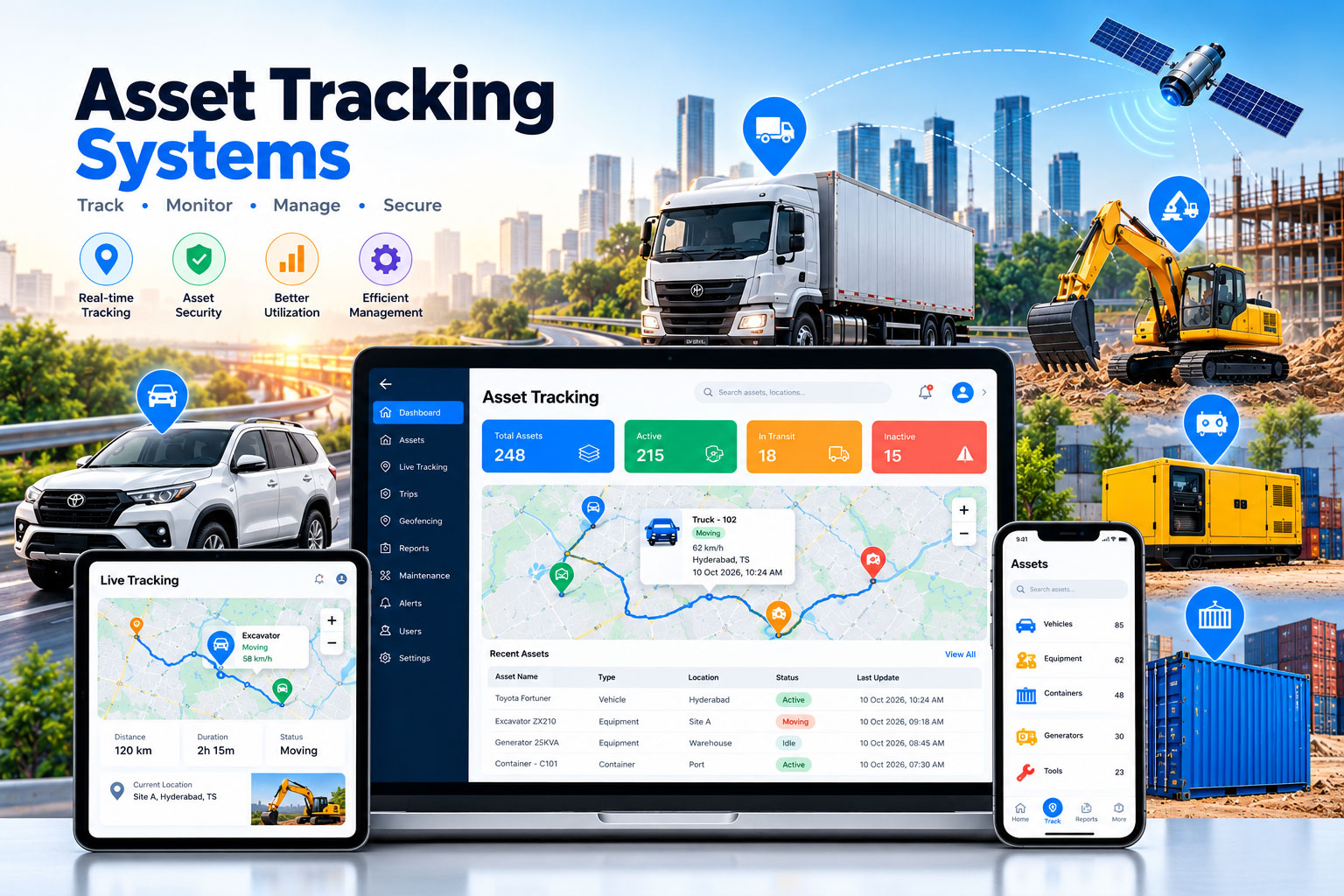
Software agents installed directly on enterprise laptops, tablets, or dedicated telematics hardware transmit exact GPS coordinates to the cloud backend. This technology powers live map trails, stop reports, and geofence boundary enforcement for mobile fleets and remote employees.
Mastering Visibility Across Multi-Site Operations
When an enterprise operates across dozens of regional branches, warehouses, or construction job sites, equipment constantly moves across jurisdictional lines. A digital asset tracking platform provides centralized governance:
- Unified Fleet and Team View: View all distributed assets on an interactive, zoomable map interface.
- Departmental Segmentation: Filter assets by specific facility, operating division, or current custodian without navigating separate local software instances.
- Stop & Idle Reporting: Identify machinery or service vehicles sitting idle for days at a particular depot, enabling managers to reassign underutilized resources to active projects.
How Geofencing & Telemetry Prevent Asset Loss
One of the most potent capabilities of modern tracking systems is geofencing. Administrators can define customized polygon or circular boundary zones around authorized worksites, customer facilities, or warehouse yards:
“When an asset moves outside its defined geofence boundary, the tracking agent immediately logs a violation timestamp and records exact coordinates, allowing security teams to act before equipment leaves the area.”
In addition to boundary alarms, telemetry systems log detailed movement trails. If a company laptop or tool truck goes missing, administrators can review its complete historic route, including exact stop times, transit duration, and location coordinates.
5 Steps to Implement an Asset Tracking System
Successfully deploying an asset tracking platform requires a structured approach to avoid operational disruption:
- Audit & Categorize Assets: Create an initial baseline of all critical equipment. Determine which high-value assets warrant active GPS tracking agents versus standard QR/barcode tagging.
- Standardize Naming & Tagging Conventions: Adopt consistent asset numbering, serial number logging, and department classification schemas.
- Configure Virtual Zones (Geofences): Establish geographic perimeter zones around each office, job site, and storage facility in your platform dashboard.
- Train Key Personnel: Educate field technicians, warehouse supervisors, and IT administrators on mobile scanning workflows and violation escalation protocols.
- Establish Periodic Review Cycles: Regularly review automated utilization reports and stop logs to continuously optimize capital allocation.
Real-Time Tracking Capabilities in Trackify Assets
Trackify Assets delivers enterprise-grade tracking features tailored for fast-paced modern operations:
- Live GPS Telemetry: Lightweight tracking agents installed on assets send periodic GPS updates, displaying live positions and route trails on an interactive map. Learn more on our live tracking module guide.
- Customizable Geofencing: Define polygon or circular boundary zones in seconds with automatic violation logging. See our geofence features.
- Stop & Idle Reports: Generate granular reports capturing stop location, duration, and timestamp history to eliminate fleet inefficiency.
- Multi-Site Management: Seamlessly manage inventory and equipment distributed across multiple warehouses, zones, and field teams.
Eliminate asset loss and track every movement with Trackify
Protect high-value equipment and gain complete situational awareness. Compare our flexible subscription plans or schedule a live walkthrough with our solutions architects.