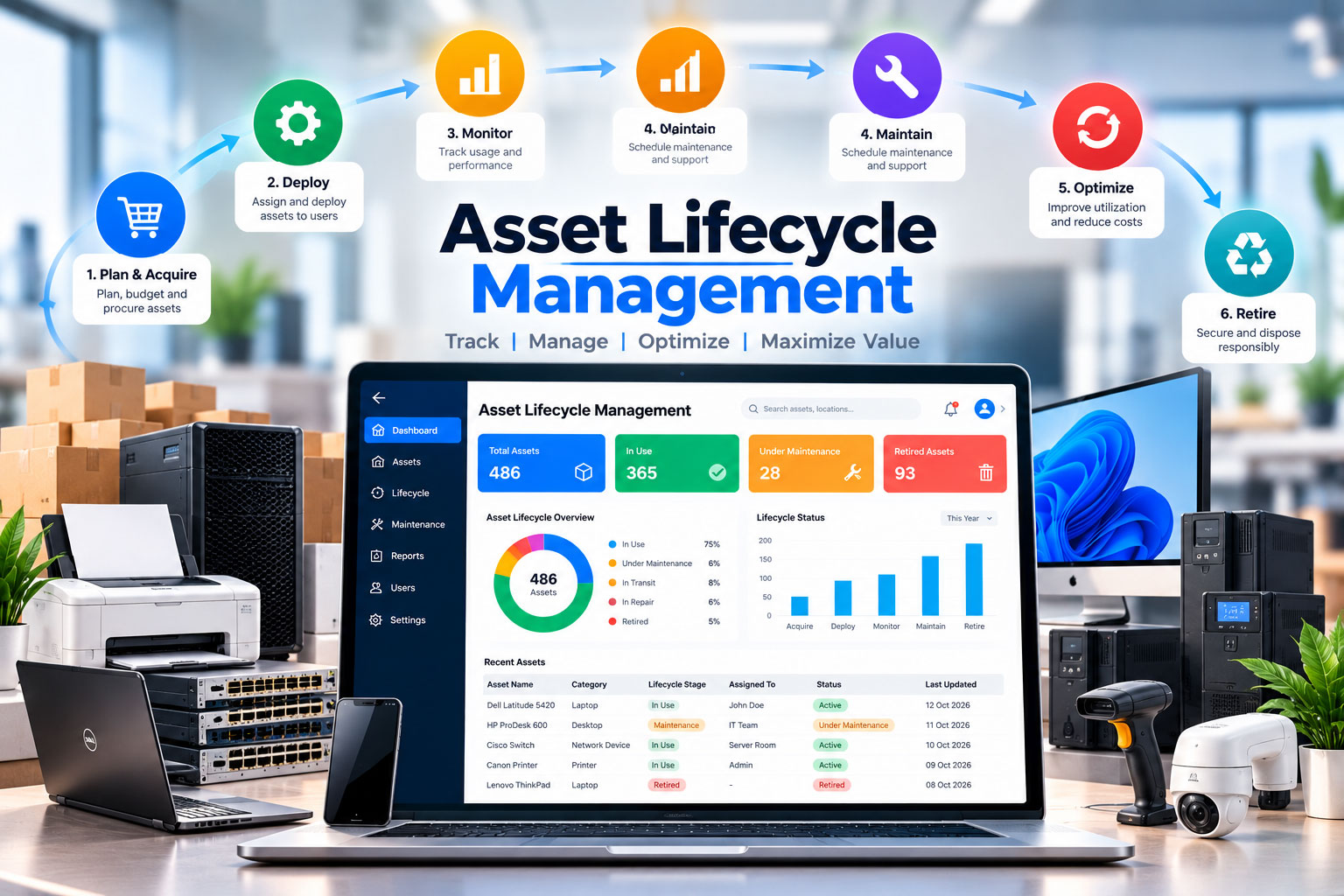
Every physical asset your organization purchases follows an inevitable financial and operational journey. From initial purchase requisition to eventual disposal, managing this continuum—known as Asset Lifecycle Management (ALM)—is the secret to controlling operational overhead and maximizing equipment longevity.
What Is Asset Lifecycle Management (ALM)?
Asset Lifecycle Management (ALM) is the comprehensive strategic process of managing an organization's physical and technical assets from initial need identification and procurement through deployment, maintenance, and ultimate retirement.
Rather than treating procurement, operations, and disposal as disconnected departmental silos, ALM treats every asset as an ongoing investment whose total cost of ownership (TCO) must be continuously optimized.
The 5 Core Stages of the Asset Lifecycle
A mature asset management lifecycle consists of five interconnected phases:
Stage 1: Planning, Requisition, and Procurement
The lifecycle begins before money changes hands. Teams evaluate current operational requirements, verify whether existing unassigned equipment in storage can satisfy the demand, and issue structured purchase requisitions. Key activities include vendor price comparison, warranty negotiation, and purchase order routing.
Stage 2: Registration, Tagging, and Deployment
Upon physical delivery at the receiving dock, the asset is immediately registered in the centralized system. Technicians apply tamper-evident QR codes or barcode tags, record the serial number, verify purchase invoice details, and assign the device to an employee or department, updating status from UNASSIGNED to ASSIGNED.
Stage 3: Operational Maintenance & Performance Monitoring
This is the longest phase of the asset's life. Here, the asset actively generates business value. Teams monitor operational health, perform routine servicing, log warranty claims, and resolve help desk incidents. Keeping complete maintenance records ensures manufacturers honor warranty commitments.
Stage 4: Financial Depreciation & Replacement Planning
As equipment ages, its book value decreases according to standardized accounting methods (such as straight-line depreciation). ALM software tracks residual value against rising repair costs, giving leadership clear data on when repairing an aging device becomes more expensive than replacing it.
Stage 5: Secure Decommissioning, Disposal, and E-Waste
When an asset reaches end-of-life, formal retirement protocols protect corporate data and environmental compliance. Hard drives undergo certified cryptographic wiping; physical units are sent to certified e-waste recyclers; software licenses are harvested for reuse; and the asset status transitions to RETIRED with an immutable timestamp.
How Lifecycle Visibility Slashes Unnecessary Capital Costs
Without lifecycle visibility, organizations bleed money through preventable operational blind spots:
- Premature Replacements: Employees request new equipment because an older unit is slow, unaware that a simple RAM upgrade or software patch can extend its service life by two years.
- Unclaimed Warranty Repairs: Up to 10% of out-of-pocket enterprise repair bills are paid on equipment that was still covered under original OEM manufacturer warranty terms.
- Zombie Software Subscriptions: Software licenses assigned to decommissioned laptops remain active and billed monthly because IT and procurement never coordinated asset disposal.
- Accurate Tax Depreciations: Fully depreciated or retired equipment is immediately removed from asset tax registers, preventing overpayment of local property taxes.
Managing End-to-End Lifecycles in Trackify Assets
Trackify Assets integrates every lifecycle phase into an intuitive interface:
- Lifecycle Status Engine: Seamlessly move items between
ASSIGNED,UNASSIGNED, andUNDER_MAINTENANCEstatuses with complete chronological audit histories. - Warranty & Invoice Archive: Store purchase dates, vendor invoices, and warranty coverage periods directly on each asset profile.
- Depreciation & Financial Reports: Generate instant depreciation summaries and export full datasets to PDF or Excel. Explore our reporting and analytics tools.
- Procurement Flow Integration: Route procurement requests and approvals directly through your asset register. Learn more on our inventory and procurement overview.
Optimize your organization's asset lifecycle today
Track every milestone from purchase order to retirement. Review Trackify Assets' cost-effective pricing or contact our solutions team for an enterprise consultation.